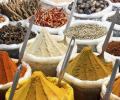
The government is formulating guidelines on the use of ethylene oxide (ETO) in samples of spices for the domestic market and exports, people aware of the matter said, as it plans to step up efforts to make quality checks more stringent. ETO, a flammable, colourless gas, is typically used as a disinfectant. It is also used as a sterilising agent and an insecticide to reduce microbial contamination in spices. However, its use is considered carcinogenic, beyond permissible limits.

Exports of 19 major commodities, including petroleum products, coal and marine items, saw growth in terms of volume during April 2023-February 2024, even as they witnessed contraction in value terms during the same period. Government officials said the rise in export volume despite a decline in value implies that these commodities show a stronger market demand.
Countries that raised concerns about the quality of Indian spices have called for urgent attention and action, Delhi-based think tank Global Trade Research Initiative (GTRI) said on Wednesday. The stakes are high since India exported spices worth about $692.5 million to the United States (US), Hong Kong, Singapore, Australia and Maldives in the financial year 2023-24 (FY24), it said. During FY24, India's spice exports were worth $4.25 billion, accounting for a 12 per cent share of the global spice exports.

Taiwan is keen to collaborate with India and help it become a leader in the semiconductor space, Jason Ho, chairman of the Taiwan Chamber of Commerce in India, said, asserting that the Taiwanese companies have the supply chain for things that the Indian market needs. Manufacturing semiconductors - used in electric and hybrid cars, drones, and communication devices - is fairly complicated, entails huge investment, and can be a cumbersome process.
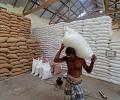
Exports of high-quality basmati rice from India grew by 22 per cent to $5.2 billion during April 2023-February 2024, amid robust demand, primarily from West Asia. According to data compiled by the commerce department, exports of basmati rice increased to 4.68 million metric tonnes (MMT) in April-February, from 4.1 MMT during the same period a year ago, registering a growth of 14 per cent.

From toys, footwear and furniture to insulated flasks, smart meters, and air coolers - the Central government over the last decade has mandated higher standards for production and imports of such items. Sample this: Till 2014, there were 14 Quality Control Orders (QCOs) covering 106 products. By the latest count, there are 156 QCOs on 672 products.

Top government officials in New Delhi have started discussions with stakeholders ranging from shipping and container companies to export promotion councils to understand the impact of the Iran-Israel tensions and plan ahead. Inter-ministerial talks are also being lined up amid the crisis situation in West Asia, sources confirmed. While the crude flows are not directly under any threat, elevated oil prices remain a concern, according to officials.

Government departments have been tasked with identifying major goals, which will include annual targets from the financial year 2024-2025 to 2028-2029.

The revamped Special Economic Zone (SEZ) law is unlikely to see the light of the day before the upcoming Lok Sabha elections, two people aware of the matter said. The commerce department had sought the Union Cabinet's nod to bring amendments to the existing SEZ Act, 2005 late last year. The plan, thereafter, was to introduce the Bill in the winter session of Parliament. Cabinet's approval remains pending.

Any government support or incentive to help exporters deal with high freight and insurance costs is unlikely.

Of the Rs 1.97 trillion that the government intends to spend on all 14 production-linked incentive (PLI) schemes, around Rs 41,000 crore remains unutilised as of now, according to a senior government official. This means that 80 per cent of the total allocated amount, or Rs 1.56 trillion, will be used to pay incentives to companies eligible to claim benefits over the next few years. The unutilised amount/savings result from undersubscription, lukewarm responses in the case of schemes such as textile, as well as a reduction in the allocation of schemes.

Prices may go up because of higher energy costs, caused by the rise in shipping charges, with commercial vessels taking a longer route to avoid the troubled Red Sea region, the finance ministry said on Monday. Iran-backed Houthi rebels of Yemen are repeatedly attacking ships in the Red Sea. While the global economy is grappling with challenges such as sticky inflation, sluggish growth, and mounting fiscal pressure, India's external sector could face "potential risks" due to the ongoing geopolitical tensions, according to the finance ministry's report on the review of the Indian economy.
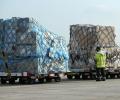
However, as of now, container availability has not been seen as an issue as adequate empties are available. The Red Sea strait is vital for 30 per cent of global container traffic and 12 per cent of global trade.

India's exports to Iran have been falling over the last one year, amid decline in rupee reserves of the West Asian economy. Going ahead, the possibility of augmenting exports to Iran may not be easy for India, considering the geopolitical tensions - Russia-Ukraine and Israel-Hamas conflicts - and the West Asian country's support for Russia and Hamas, people aware of the matter said. Exports to Iran saw a downward spiral since November last year.

With the spate of businesses turning their attention to Ayodhya, land rates have shot up, in some pockets by as much as 10 times. Whether one walks into a hotel lobby or sits down for a meal, land deals are being discussed at every other table -- one on one or among groups.
The Centre is unlikely to offer new direct tax incentives for units operating in special economic zones (SEZs) and may instead allow the grandfathering of previous exemptions that such units were entitled to, according to proposed amendments to the SEZ Act, 2005, people aware of the matter said. The amendments, proposed by the commerce department, will soon be considered by the Cabinet for approval. This represents a departure from the department's earlier plan to introduce these changes through the Development Enterprises and Services Hubs (DESH) Bill, 2023, which faced strong criticism from the ministry of finance.

Commerce secretary Sunil Barthwal is set to attend a two-day meeting from October 23 at the World Trade Organization (WTO) headquarters in Geneva, that would focus on finding solutions and giving the 'necessary political push' for at least some crucial global trade issues. Next week's meeting comes ahead of the WTO's 13th ministerial conference (MC13), scheduled in Abu Dhabi in February 2024. It will see participation of senior government officials from all WTO member nations.
India's trade ties with Israel have only strengthened in the years after 2019. The total value of trade rose to $10.5 billion on a rolling four-quarter basis in June 2023 from $5.5 billion in the same month in 2019, shows a Business Standard analysis of data from the Centre for Monitoring Indian Economy (CMIE). A rolling four-quarter number provides a comparable figure across different time periods.
The government has decided to hold off introducing the production-linked incentive (PLI) scheme for additional sectors until it verifies the efficacy of existing initiatives. Top government officials have received mixed feedback on the scheme, including insights from the Economic Advisory Council to the Prime Minister, people aware of the matter said. "There are no new PLI schemes in the offing.

Officials from India and the United Kingdom (UK) are working overtime to address the contentious issues related to the proposed free trade agreement (FTA) between the two nations, in a final push to conclude the deal by the year-end. Commerce secretary Sunil Barthwal was headed to London on Thursday after completing his four-day visit to Brazil. Other key officials from India's negotiating team will be joining Barthwal in the UK capital, hoping to make headway in the FTA negotiations, which started in January last year, a person aware of the matter told Business Standard.
 © 2026 Rediff.com - Advertise with us - Disclaimer - Privacy Policy - Sitemap - Feedback - About us - Terms of use - Grievances